Winning is a Necessity


Winning is extremely important to the human psyche and biology.  The people who get what they want in life know how to win.  This can not be overlooked or overstated.

I believe the people who know how to win are likely happier in pursuit of their life goals.  I think most would agree with this statement.  So then, why is it most people don’t know how to win?  Or better yet, why isn’t the art of winning taught more in schools and post graduate education?  Maybe it is, we’re just not paying attention?

charlie-sheen

I’m not sure, maybe we should ask Charlie Sheen.  Sadly, I don’t think answers like Tiger Blood, or Adonis DNA are what we’re looking for so we’ll have to dig a little deeper.  Thanks for the inspiration Chuck.

Lets first take a look at what a “WIN” does for us mentally

  • Confidence – think about the last time you won anything and try to get back into those feelings for a moment.  How did you feel?  Awesome is a pretty popular response.  Who doesn’t want to feel more awesome?  Winning is foundational to a higher level of confidence.  More confidence typically yields more victory.
  • Winning Effect – Author John Coats in his book The Hour Between Dog and Wolf: How Risk Taking Transforms Us, Body and Mind tells us animals involved in a fight who were victorious, were more likely to win their next fight.  Which brings me to my next and extremely important point.
  • Momentum – I always say, “Momentum is much easier to steer than to start.”  Life can be hard.  Some know this more than others.  This is exactly why winning, and winning often is so important to each of us.  Winning consistently creates what I call “life momentum.”
  • Limitless – Have you ever won enough? I know I haven’t.  Author Grant Cardone describes this in his book The 10X Rule: The Only Difference Between Success and Failure by stating, “There is no shortage of success, nor are there limits to the amount of success one can achieve!”  Read this again if you’re looking to get amp’d up.  He’s right.  I frequently listen to the 10X Audiobook when I need to get it going or feel like I’ve achieved “enough” for a while.
  • Attitude – People like to associate with a winner.  It’s more fun, it’s positive, and it’s likely uplifting.  Legendary coach Bear Bryan said, “Winning isn’t everything, but it sure beats anything that comes in second!”  I LOVE THAT ATTITUDE.

I won’t go there in this post, but if you do a little more research you’ll easily see that winning doesn’t only affect our mental game but our biological makeup as well.  Dr. Coats offers a unique perspective into the testosterone levels of successful, young, male stock traders during times of financial boom.

The million dollar question remains, “How do I win more often?”

  1. Stay Hungry – Winners come from all walks of life.  What they all have in common is an unquenchable thirst for victory and nothing will stop them in their pursuit.
  2. Stay Focused – Elite athletes have a state of mind referred to as “the zone” and when they’re in it nothing can stop them.  The zone is a state of complete focus and freedom.  Mastery is at work with the athlete because they’re not spending time thinking, they’re only reacting to what’s in front of them.
  3. Attention to Detail – The US Navy SEALs are famous for their mindset and training regimen.  Their world class team members preach attention to detail every day, in every drill, and every exercise they compete.
  4. Drill – In order to learn how to win an individual must be willing to practice at a high level for a great deal of time.  Mediocre practice will yield mediocre results.  Winners sweat the small stuff and sweat if often.  Earlier I used the word “mastery” when referring to focus in point two.  In Malcolm Gladwells book Outliers he states it takes 10,000 hours to be an “expert” in a topic or field.  10,000 hours.  Most people work around 40 hours per week.  That equates to nearly 5 years of drills.  Are you spending 8 hours a day getting better?  I know I’m not, so for most it’s going to take 10+ years to mastery.
  5. Speed Bumps – Failure will happen and it should if you’re taking chances.  Accept failure as a speed bump and not a impassable chasm.  Life will go on.  Learn from it and learn quickly so you can get back to winning again.  Just don’t fail making the same mistake over and over.


 ACTION ITEM: Get out and get winning.  You need to be winning often.  Life is a contact sport and no records were set from the sidelines.


One Million Isn’t Your Goal

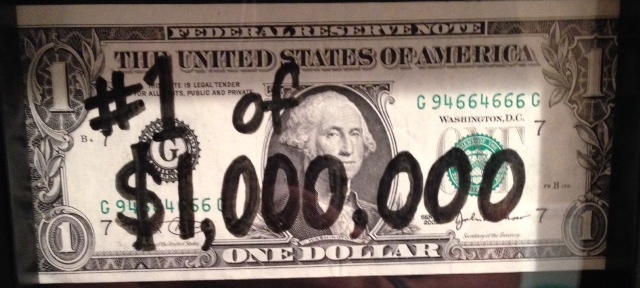
When I was 23, I wrote on a dollar bill “#1 of $1,000,000” and was naive enough to think this is what it would take to make it in the world.  If I could get here, I would be doing the right thing.  If you don’t believe me, here it is still framed in my office.  I still use it as motivation, but in a very different light.

$1 Million Goal

$1 Million Goal

Nine years later, I reflect back and laugh at the ignorance of my younger self.  If I had one million dollars right now, would I have the world by the balls?

HELL NO!

Money will not be the sole driver to anyone’s success and truth be told, why only one million?  The efforts required to reach ten million aren’t really that different from one million.  Yes, it is ten times the amount but most people that make ten times their peers don’t work 10x harder.  There isn’t enough time in the day.  If you’re ONLY interested in the money, set a bigger goal!

However, the more important viewpoint isn’t to focus on the number because inevitably when you hit it, then what?  Please don’t tell me you’ll buy stuff.  You’ll end up just as unfulfilled, but with stuff.  People spend their whole lives working for the man only to end up retired at 65 with nothing to do and no ideas of where to start.  Want to know what boredom looks like?  This is it.  It is followed by unhappiness.  Even the guys in Grumpy Old Men had fishing as a hobby!

Screen Shot 2014-06-28 at 7.17.42 PM

The secret then, as Tim Ferris teaches in “The 4-Hour Workweek: Escape 9-5, Live Anywhere, and Join the New Rich (Expanded and Updated)“, isn’t to delay life’s treasures forever, but to embrace them along the way.  Enjoy mastering your craft at the same time you’re enjoying and living life to the fullest.

Daniel Pink expounds on this topic as well in this terrific video, “Drive: The Surprising Truth About What Motives Us”.  I promise you it’s worth the ten minutes.

People aren’t only looking for one million dollars.  They’re looking for autonomy and mastery.  They’re looking to be themselves and to enjoy their craft.  People want to be challenged and contribute.  It won’t take too many companies like Google to see that success and achievement run a parallel path to people enjoying what they do.

Can you still have the goal of making money?  I really believe the answer is a resounding yes.  There is nothing wrong with making money.  There is nothing wrong with making a ton or a little money.  It is a resource.  Some value it more than others.  I do wish people understood it better, but that is a completely different conversation.

Where do you go from here?

ACTION ITEM:  Follow the List Below

  1. Do set a goal for your income.  It’s important to you and your family.  Take actions to fulfill the goal then 10X it.
  2. Also set a goal for autonomy.  Where would you like to have more freedom?  Or, what do you need to do to earn more freedom?
  3. Seek out a new challenge.  Learn a new language, plan a vacation, start a blog, etc. Successful people love a new challenge.  Seek and destroy!

Halftime Adjustments for 2014

Screen Shot 2014-06-22 at 3.50.20 PM We’re about a week away from June 30, which is also the halfway mark of 2014.

Pretty hard to believe isn’t it?  

It’s almost time for the 4th of July and it’s a really great time for reflection.  If you haven’t gone back and looked at your 2014 goals, now is the time.  Every all-time great coach understood the art of making halftime adjustments to win.  This should be no different for you or I. I’m a glass half full kind of guy, and there is half of the year left to achieve my goals.  If you don’t have goals written down, do it soon!  You have the rest of 2014 to achieve them. Good goals follow the acronym S.M.A.R.T.

  • Specific
  • Measurable
  • Achievable
  • Results-Focused
  • Timely

In order to help the audience, I’m going to share with you some of my personal goals and precisely where I stand.  Although I may not share with you the exact number (for personal privacy reasons), I will tell you what I’m doing about each of them.

  1. Debt Reduction Goal – My wife and I had the goal to have zero debt (with the exception of our house) by August 1, 2014.  I can tell you we will accomplish this goal by the beginning of July.  This feels fantastic!  It provides a tremendous amount of freedom and flexibility for us to attack all that life has to offer without fear.
  2. Savings Goal – Along with our debt reduction goal, we have a goal to maintain growth in our savings to hopefully build a house some day.  I can tell you we’re about 70% along the way to our goal today.  Maintaining our current plans should put us in a position to achieve the goal by September or October of 2014.
  3. Vacation Goal (Unplug Time) – Our goal was to take a great vacation before the baby arrives in August.  Beth and I spent five days in San Francisco this spring and it was AWESOME.  At the end of this post, there are a few quick pics to document our visit.  We relaxed, walked a TON, and enjoyed each other’s company without phone calls, emails, and interruption.  I highly encourage you to do this in 2014 if you haven’t already.
  4. Income Goal – I have a goal to increase my income 35% in 2014.  I thought about this a great deal a few months back and I’ve had to reevaluate where I’m spending my time and who I’m spending it with.  I had NO chance of hitting my target.  I will tell you I got angry with myself and had to reflect on what I was doing to positively impact this goal.  I can tell you I’ve seen a great deal of change after a serious self evaluation and I’m excited to see where 2014 ends up.  More to come on this at year-end!
  5. Volunteer Goal – I set a goal to volunteer three times in 2014 at places where I’ve never done ANYTHING for in the past.  This would cause me to get uncomfortable, meet new people, and help with others.  This next statement is extremely selfish, but it is the truth.  When I volunteer, I feel really great afterwards.  I need to get my ass in gear on this one.  I’ve got six months left to make good on this promise.
  6. Daily Focus/Meditation Goal – This year I committed to spending a focused amount of time daily clearing my mind and more recently practicing meditation.  It’s something I picked up early in 2014 and something I’ve fallen in love with.  The goal is to spend 20 to 30 minutes focused on relaxation and transforming my thoughts.  The challenge in this goal is the word DAILY.  I’m going to work harder on the daily focus of this goal because I can literally feel the results in my efforts when I remain diligent in the process.

I hope you enjoyed my look at a few of the goals I’m attacking in 2014.  I hope this will give you the energy and excitement you need to tackle your goals.  It’s extremely helpful for me to share these goals publicly for accountability.

ACTION ITEM: Take a moment to review your 2014 goals.  If you don’t have them, work some time into your schedule to get them written down.  Next, it’s truthful reflection time.  What’s keeping you from attaining the goal?  Lastly, here is a link to Tony Robbins goal setting workbook.  It’s fantastic.

San Fran Pics:

Zac & Beth visit Google World Headquarters

Zac & Beth visit Google World Headquarters

San Francisco Selfie

San Francisco Selfie

View from our patio

View from our patio

Golden Gate Bridge

Golden Gate Bridge

The Beauty in Paranoia

I don’t think paranoia is a dirty word when used correctly.

When you think of paranoia, how do you feel?

  • Anxious
  • Worried
  • Scared
  • Cowering
  • Trembling

A couple weeks ago, I was watching an episode of Shark Tank I had on the DVR and Robert Herjavec said something I’ll never forget to a show guest.

Shark-Tank-judge-on-entrepreneurship-II122L8V-x-large

The Most Paranoid Wins

He said, “In this and any other business, the most paranoid wins!

The most paranoid wins?  Are you nuts?

This statement may have sent shock waves through thousands of viewers throughout the country, but I think they’re missing the boat.

Paranoia in business isn’t about fear, Xanax, or meetings with a mental health professional.  I believe it’s the exact opposite.  Paranoia in business is about being proactive.  The more paranoid, the more prepared.  This was Robert’s point.

The business world today is being recreated weekly if not daily.  New triggers and trends are impacting our world from hundreds of different angles.  Mistakes are being made in the thousands if not millions, and people are learning from these mistakes at a phenomenal rate.  The business owner looking for funding on this specific project wasn’t paranoid enough and Robert sensed it with his super-human shark senses.

That said, how can you be more paranoid about your business today so you don’t make the same mistake?  Below is a list of five questions you can ask to be better prepared (or more paranoid).

  1. What keeps your client awake at night?
  2. How can you make your product/service offering better immediately to the end user?
  3. What are you missing to achieve more scale with your efforts?
  4. Are you building a business or collecting transactions? (There is a difference)
  5. Have I taken time alone this week to think about our client/customer?

Paranoia in business revolves around two key words.  Solutions focused.  Paranoid leaders are challenging leaders inspecting their team’s work and process.  Paranoid leaders think of their offerings from the client perspective instead of always from the business owner’s viewpoint.  Paranoid leaders don’t know all the answers, but they’re not afraid to ask the questions.

Lastly, paranoid leaders think a great deal about their PEOPLE.  Are they challenged? Are they having fun? Are they growing personally and professionally?  This is the leader’s responsibility, and the paranoid leader isn’t afraid to challenge themselves to get better daily.

shark-tank-rober-herjavec

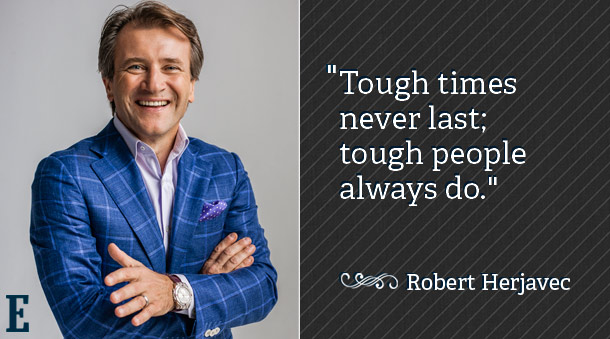
Tough times never last; tough people always do

ACTION ITEM: Try and be a little more paranoid this week and utilize one or a few of the five questions listed above.  If you put them to use and see results, I’d love it if you’d share your outcome with the group.

You Wouldn’t Believe What Happened To Me

You Wouldn't Believe

I don’t know about the rest of you but I’m 100% sure I’m tired of hearing this.  “You wouldn’t believe what happened to me!”

I’m not entirely sure when it happened, but I feel like one of our biggest challenges societally is victim thinking.  It’s a borderline epidemic in our country and continues to spread.  Like any horrible plauge, “this one is airborne,” so watch out! keep-calm-and-avoid-the-plague-5

If you’re unsure or may have a tough time putting your finger on what I mean exactly I’ve listed a few of my personal victim thought favorites below:

  • It must be nice to have <insert anything you deem of monetary value>
  • My boss just doesn’t get it.  She doesn’t want me to succeed
  • Nothing ever seems to fall in my lap like it does for <insert friend>
  • We never have any money to do what we want
  • I can’t do that.  They’ll never let me!
  • Zac is sooooo lucky.  I wish I was that lucky
  • Woe is me…

Do you know any of these people?  I know I sure do and there is one common thread in all victim thinkers.  Everything happens to them, nothing happens because of them.

EVERYTHING HAPPENS TO THEM, NOTHING HAPPENS BECAUSE OF THEM (Caps = Me YELLING!)

If you’ve read previous posts on this blog you’ll know I despise “Keeping Up With the Joneses” or living someone else’s life.  I liken victim thinking challenge as equal to the challenges noted in the last sentence facing us today.

It’s easy to live wanting, hoping, wishing, and EMPTY lives.  It’s easier to explain to those around you that it’s entirely someone else’s fault for: where you are, who you are, and what you may become.  You’re a punching bag and everyone seems to get two turns throwing haymakers.

Stop.  Good news alert!

There are three holes in our head we can focus on to impact massive change to victim thinking.  They are:

  1. Your mouth
  2. Your left ear
  3. Your right ear

The simple control of what comes out of #1 and into the latter two holes is life changing.  The beauty and simplicity of this is each of us controls this choice.  No one makes it for us.

If you have 12 minutes (and I know you do) you must meet Sam Berns.  He makes every word written on this post come to life!  Sam could easily be a victim, but he made the difficult choice not to be.

 ACTION ITEM:  Control victim thinking with your ears by being able to spot it quickly and decisively.  The next choice is up to you.  My common response is “run like hell” when you hear it.   The second control should be predictable.  Speak less often about what happens to you, and find opportunities to reflect on things that happen because of you.

Lastly, if you find value in this message and have implemented any of the above or even have a comment for the readers of this blog I’d really love it if you would share.  It would mean a great deal to me personally!!

The Most Overlooked Leadership Skill

Here is a list I found from Forbes titled, “Top 10 Qualities that Make a Great Leader“.  Pretty good list.  However, I truly believe there is a gapping hole in this list.  What powerful leadership skill is being overlooked?

I think it’s an extremely simple skill and maybe that is exactly why it is overlooked and often difficult to master.

The skill: Vulnerability Screen-shot-2012-08-09-at-9.21.01-AM

As most of you have already jumped to a conclusion on my addition, I’m going to ask you to pump the brakes for a definition of vulnerable.

vul·ner·a·ble: susceptible to physical or emotional attack or harm. (Of a person) in need of special care, support, or protection because of age, disability, or risk of abuse or neglect.

There is some very powerful language used in this definition.  Here are a few impactful words that really stand out to me.

  • Susceptible
  • Attack
  • Harm
  • Support
  • Risk

Immediately this doesn’t feel right.  It feels to me like a “vulnerable” leader is a weak leader.  Not exactly the skill set pouring out of leadership books for the last 20 years.  However, is the world different today than it was 20 years ago?

Team members and successful organizations today want to have something to believe in.  More to the point, they want to work with someone they can TRUST.  There are many ways to earn trust, but I think one way is to open up and show your true colors.  Possibly even more important, showcase you don’t know everything and have made mistakes.

Transparency is a word I’m not terribly fond of currently because of its massive overuse in political jockeying.  But, transparency is a reality of being vulnerable.

The vulnerable leader understands better than most their strengths, and the biggest time saver of all, their weaknesses.  The vulnerable leader knows what they don’t know.  The vulnerable leader has struggles (as we all do) in life and isn’t afraid to let others in to see the real person battling these struggles.  The vulnerable leader is a servant leader.

Contrast this with the old school leaders we learned about growing up.  The leaders who pushed with an iron fist, strong will, and an indestructible armor of confidence.

The reason the vulnerable leader will continue to gain traction and transcend board rooms is simple.  There are far too many choices today to work for the selfish leader.  Business success is about having great relationships.  How many great relationships are you in today where the cornerstone of trust was laid with vulnerability?

ACTION ITEMS: It’s okay to let others in and let them see the real you.  I can promise you, it’s far more rewarding than obsessing over the maintenance of perfection.

Based on Your Newsfeed, Life Sucks

This title should make each of us pause for a moment and reflect. bitsoftruth24 Read it again.  How does it make you feel?  Does it sound like something that could come out of my mouth? (I hope not).  But, how does it make you feel?

  • Gross
  • Inadequate
  • Lame
  • Shallow
  • Boring
  • Angry
  • Paranoid

Not positive feelings!  Why then do so many of us think this way about our lives when we’re viewing social media status updates and posts? Let’s dive in a little deeper as to exactly why these feelings come about in the short list below.

  1. Friends/Followers – Be honest.  Of the people you call friends or follow socially, how many of them do you have a truly “meaningful” relationship with?  Why are so many comparisons of my life to yours made every day?  Why is it that because I can see your newsfeed, you’re instantly a measuring stick to my life?
  2. Stuff Posts – I bought stuff I really didn’t need, but you wished you had.  That makes me awesome and you wanting to be awesome with my newly purchased stuff.  Don’t take into account the question if I could even afford it, or if it was a wise financial decision?  Just know I have it and you don’t.
  3. Experience Posts – I’m in Hawaii, the Virgin Islands, in Aspen Skiing, at an expensive restaurant, and you only dream of visiting or experiencing these places.  How could life be so good?

I’m going to get in the front of the line here.   I’m guilty of thinking ALL OF THE ABOVE! I’ve said it in previous posts and I’ll say it again.  Social media is a great tool for communication (huge understatement) and has totally reinvented the definition of “conversation” in the future.  It allows us to stay in contact with people and potentially even connect with individuals through new channels.

However, social media a HORRIBLE measure of the happiness, success, struggles, and meaningful relationships in our lives.  Social media is an extremely dangerous thermometer, yet most reading this post use it to take the temperature of our lives on a daily basis. It’s human nature to compare, but this comparison can’t come to the point of leading an unfulfilling or unhappy life.  “Keeping up with the Joneses” paranoia will set in and this is a race you or I will NEVER win.  You can’t, because you’re not the one running it.  You will always be in second place playing keep up.  It’s exhausting. I know people running this race.  Do you?

ACTION ITEM:

  1. Set your own goals and pursue them aggressively with passion.  For you, not for anyone else.
  2. Put the phone down.  Instagram will stay in business while you’re enjoying the company of your closest friends.
  3. Don’t forget to smile.  When I take a moment to count my blessings (and there are many), the paranoia subsides instantly.
  4. Your life doesn’t suck!

Why Am I Wearing Handcuffs

I’d like to introduce you to a pair of handcuffs.

Handcuffs = Mental Restraints

Handcuffs = Mental Restraints

Many of us wear them, but you won’t see them in plain sight.  Others are burdened by the immense weight of many pairs of handcuffs, but you won’t see them either.  With all this said, where am I possibly looking to find all these handcuffs?

They exist in the simple statements listed below:

  • I’m too qualified to do this
  • I’m too short
  • I’m too out of shape
  • I’m too new to the team
  • I’m too dumb to learn a new skill
  • I’m too new to the marketplace
  • I’m too upset
  • I’m too afraid to be challenged
  • I’m too depressed
  • I’m too emotional
  • I’m too young
  • I’m too broke
  • I’m too DAMN SCARED!

You see where I’m going with this?

Each of these statements are uttered by millions of people every day and in doing such, they might as well put on a pair of handcuffs for every one of them.  I know I’ve said them.  I’m sure you have too.

After listening to hundreds of podcasts on leadership and entrepreneurship there is a very common thread the very successful follow.

They DO NOT let others dictate their path to success or allow thoughts of “I’m too…” to cloud their thinking or progress.  They go for it and are unapologetic about their quest.

ACTION ITEM: It is almost as certain as the sunrise tomorrow; an “I’m too…” thought will invade your brain and the powerful work you’re masterminding.  My process to immediately counteract this is to:

  1. Embrace the Feeling
  2. Challenge It 
  3. Take Action Against It


Failure is a Debt Needing to Be Paid

No matter your viewpoint on debt, there is one universal truth.

DEBTS MUST BE PAID!

One of my favorite and most repeated lines from the movie Rounders is from the character Teddy KGB.  The Russian mobster says, “Pay him, that man his money.”  Here is the YouTube video.

So how is failure a debt waiting to be paid?  

  • If you have zero debts (failures), you’re taking ZERO chances.
  • Most debts we’re accustomed to are due monthly.  Failure isn’t a one time occurrence.
  • Some debt is good.  It means you own something.  Failure means you’ve taken ownership in your future and learning from experiences.
  • Debts don’t last forever, neither does failure.
  • Failures are investments in your future.  Just like paying down debt.

Debt Reduction and Failure Production

Dave Ramsey is a widely popular financial author, speaker, and radio host.  Dave has a very simple formula for paying down debt with the ultimate goal of living “debt free” as his followers scream on his radio show.  The key to his formula is what Dave calls “The Debt Snowball.”  This could really be summed up as momentum.  Start with small debts and begin paying them off as fast as possible.  With each debt you conquer you gain momentum and habits are formed.

Habits.

Anyone ever tried creating a failure habit?  Seems almost counter-productive.  What if instead you were interested in the behavior of not being fearful of failure.  This the debt needing to be paid.

The #1 fear I have with growing people is mediocrity.  When a person achieves a small amount of success there is the opportunity to throttle back and settle.  Mediocrity sets in and growth comes to a screeching halt.  Instead consider the alternative.   The debt of potential failure coming due.

Now the achiever has a different outlook on the future.  They continue to challenge, push others, and push themselves.  Does it always work out?  Of course not.  But the learning doesn’t stop either!

ACTION ITEM:  The Debt is due for you this month just as it is for me.

Life’s a %itch

That’s right folks.  Life’s a PITCH!

The-Pitch-Pic

Wait, not what you were expecting?  No time for negativity here.  In each of our lives, we’re going to rely on our PITCH to get things done and get what we want.  Everyone has something to sell, some are just more committed to it than others. Imagine what’s being sold right now, this very moment by various professions throughout the world:

  • The College Coach – Selling a top recruit on their school, their style, and the athlete’s eduction (maybe).
  • The Non-Profit – Leaders are out selling their ideas and asking for donations to make the world a better place.
  • The Teacher – Looking to get more resources for his/her classroom to enrich the learning experience for his/her students.
  • The Interviewee – At some point, you will be looking for that dream job.  The only way to get it is sell yourself against the steep competition.

And the list goes on…

Knowing this fact of life, I’ve provided a list of five elements that help me deliver a better pitch and get more of what I want.

  1. The Buyer’s Side – Here’s a simple statement.  Over 50% of presentations are lost immediately because there is no understanding of the buyer’s side of the proposal.  Where did I get that number?  If you only understand your half, you can’t possibly win the other 50%.  Get to know and understand your buyer’s thoughts, feelings and emotions.
  2. Rehearse – Over and over again.  A coach would never expect an athlete to perform at a high level with zero practice.  How do you expect your idea to be bought without rehearsing it?  Couple tips here.  Record it so you can play it back to yourself for feedback.   Secondly, practice it again.  You can only benefit from the repetition.
  3. Storytelling – If you’re following my work, you know my love affair with storytelling.  I believe the ability to tell a great story will separate the good from the great pitch.  This ties directly into the first point.  Understanding the pains and hardship of our buyer will help you draft the perfect story.
  4. Visuals – If at all possible, make the story easy to understand.  We’re blasted with more and more messages every day.  Our job is to make the story simple, easy to understand, and not require a semester’s worth of research to buy-in.  Visuals will help you accomplish this task.  Think of when you were a kid and participated in Show and Tell.  Doesn’t quite have the ring to it if there is nothing to show and we only TELL.
  5. ASK – Every pitch needs to come with an ask.  Selling yourself, a product, a service, or anything is only talking unless you ask the other side for commitment.  If you’re preparing to pitch, prepare to ask.

Use these tips to your benefit the next time you have something to pitch.  If these tips help you get more of what you want, it would mean a great deal to me if you’d share this post with others.

ACTION ITEM: Pitch, Pitch, Pitch, and PITCH your ideas!  No one ever won them all, but you’re guaranteed to fail if you never try.